

BLOG
Cornstarch Cups for Wholesale Buyers: Materials, Performance and Sourcing Guide


Cornstarch cups are attracting attention from food packaging importers, wholesalers and distributors looking to expand their product ranges beyond conventional plastic cups. But for professional buyers, the decision to source cornstarch cups involves more than environmental positioning.
Material composition, product performance, unit price, minimum order quantity and factory supply capacity all affect whether a product makes commercial sense.
For buyers comparing cornstarch cups with PP cups or other alternative materials, understanding these differences is an important first step.
This guide examines the key factors buyers should consider when sourcing cornstarch cups from China, including material composition, performance, cost and supplier evaluation.
1. What Are Cornstarch Cups?

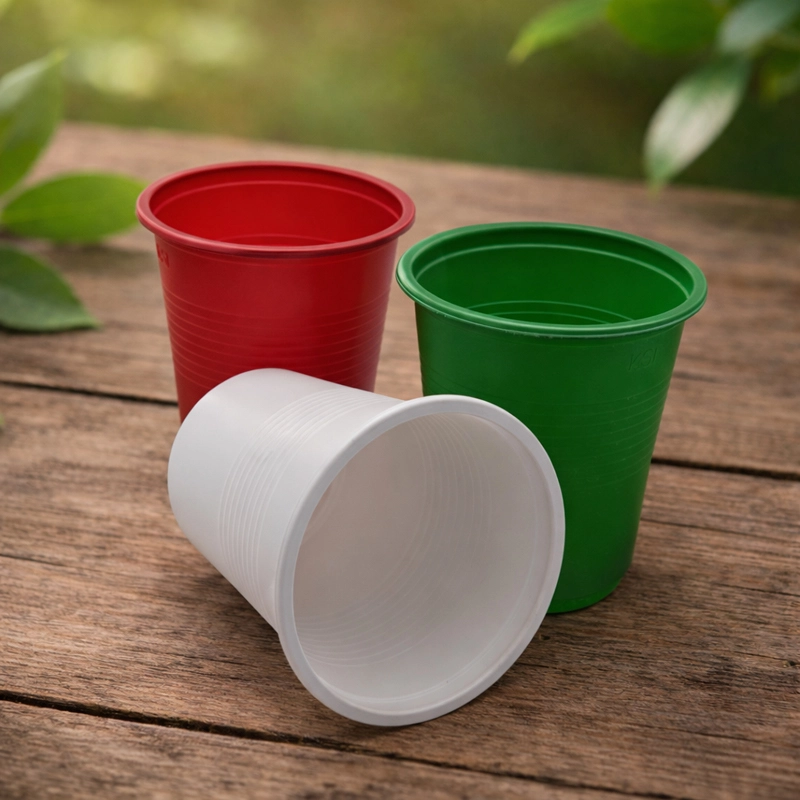
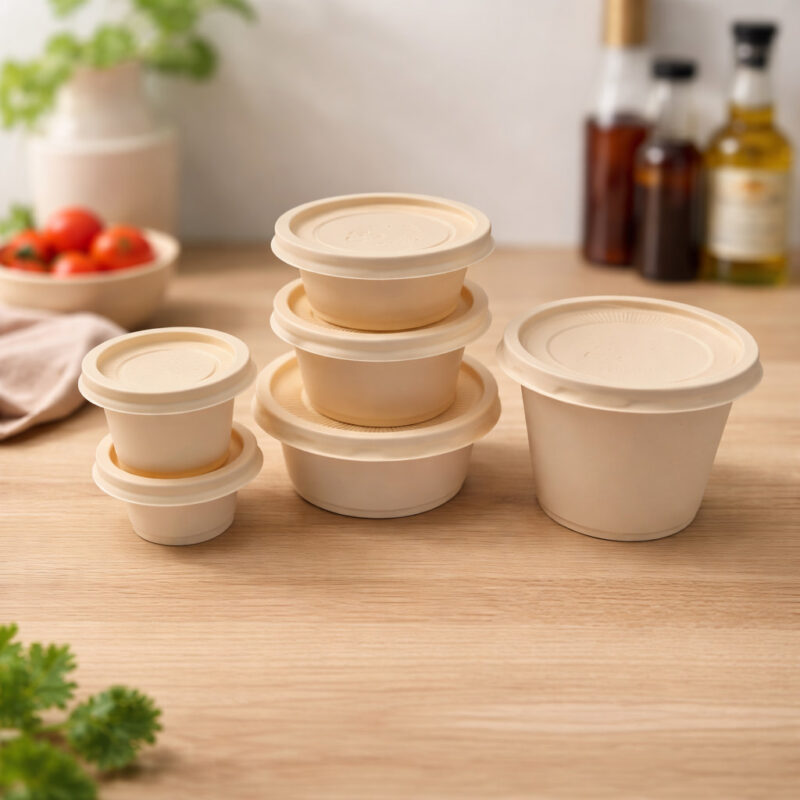
Cornstarch cups are disposable cups made using a material formulation that incorporates cornstarch. However, the term “cornstarch cups” does not describe one universal material. Different manufacturers may use different formulations, additives and manufacturing processes.
Some products marketed as cornstarch-based tableware contain starch blended with other materials to achieve the required strength, flexibility, heat resistance and production performance.
For this reason, buyers should not assume that every cornstarch cup has the same composition or environmental characteristics.
When evaluating a supplier, it is important to confirm the actual material formulation, product specifications and available test reports.
For importers and wholesalers, this information helps establish whether the product meets the requirements of their target market and intended product range.
2. Key Factors That Affect Cornstarch Cup Performance
Not all cornstarch cups perform identically. The material formulation, wall thickness, product design and manufacturing process can influence the finished product.
Strength and Durability
Cup strength affects handling, stacking, transportation and the overall user experience.
When comparing suppliers, buyers should examine the finished cup rather than relying only on a material description. Wall thickness, shape retention and resistance to deformation can differ between products.
For large-volume purchases, consistency across production batches is just as important as the performance of the initial sample.
Heat Resistance
Heat resistance depends on the specific formulation and product design. A cup suitable for one temperature range may not be suitable for another.
Buyers should request the manufacturer's recommended temperature range and supporting test information before specifying a product for hot or cold beverages.
Do not assume that all cornstarch cups can withstand boiling liquids or microwave heating.
Liquid Resistance and Leakage
Liquid resistance is another important consideration when evaluating disposable cups.
The cup should be assessed under the conditions for which it is intended to be used. Buyers should confirm whether the product is suitable for the required liquid temperature and contact duration.
If leakage resistance is a key purchasing requirement, request samples and conduct practical tests before placing a bulk order.
Consistency Between Samples and Bulk Production
A sample may demonstrate that a product meets your requirements, but commercial purchasing also depends on repeatable manufacturing.
Before confirming an order, clarify the approved product specifications, packing details and quality requirements with the supplier.
These details become particularly important when importing full-container quantities or building a long-term product line.
3. Cornstarch Cups vs. PP Cups: What Should Buyers Compare?
PP cups remain an established choice for disposable food packaging because of their mature supply chain and broad availability.
Cornstarch cups offer another material option, but the right choice depends on the product specification, purchasing cost and requirements of the destination market.


Comparison factor | Cornstarch Cups | PP Cups |
|---|---|---|
Material | Cornstarch-based formulation; composition varies | Polypropylene |
Supply chain | Depends on product and manufacturer | Established and widely available |
Product performance | Depends on formulation and design | Depends on grade, thickness and design |
Environmental positioning | Depends on composition and supporting evidence | Conventional plastic; recycling depends on local systems |
Purchasing cost | Must be evaluated by specification and quantity | Often highly competitive |
Customization | Depends on supplier and MOQ | Widely available |
Supplier evaluation | Composition, performance and production consistency | Grade, performance and production consistency |
The most important point is that cornstarch cups should be evaluated as a commercial product, not simply as an environmental alternative.
For professional buyers, the relevant questions are straightforward:
Does the product meet the required specifications?
Is the unit price competitive at the intended order quantity?
Can the supplier maintain consistent quality?
Are the material claims supported by appropriate documentation?
Can the product be supplied reliably over repeated orders?
Comparing these factors provides a more useful basis for purchasing decisions than comparing material names alone.
4. Are Cornstarch Cups Biodegradable or Compostable?
The answer depends on the actual material formulation and the applicable testing or certification.
The terms biodegradable and compostable are not interchangeable in every context. A product's ability to biodegrade or compost depends on its composition and the conditions under which it is tested and disposed of.
Similarly, a product containing cornstarch is not automatically certified compostable.
Before purchasing cornstarch cups for a market with specific environmental requirements, buyers should confirm:
The complete material composition or relevant material declaration
Available biodegradation or compostability test reports
Whether the documentation applies to the exact product being purchased
Whether the destination market recognizes the relevant certification or standard
Which disposal conditions are required for the environmental claim
This is especially important for importers and distributors who plan to promote the product as biodegradable or compostable.
Accurate product information helps avoid making claims that cannot be substantiated by the available documentation.
5. Cornstarch Cups vs. PLA Cups and Other Alternative Materials
Cornstarch cups are not the only option available to buyers exploring alternatives to conventional plastic cups.
PLA cups, paper cups and other packaging materials have different characteristics, production methods and commercial considerations.
Material | Key Consideration for Buyers |
|---|---|
Cornstarch-Based Material | Verify material formulation, product performance and supporting environmental claims. |
PLA | Check the specific PLA formulation, temperature limitations and applicable compostability certifications. |
PP | Compare price, strength, product specifications and local recycling options. |
PET | Check clarity, dimensions, weight and suitability for the intended application. |
Paper-Based Products | Evaluate structural performance, coatings and applicable disposal or recycling requirements. |
There is no single material that is automatically best for every buyer.
For distributors, the decision may depend on which product specifications their customers require, which environmental claims they need to support and what price level the market will accept.
A practical approach is to compare actual products from suppliers rather than relying on broad claims about entire material categories.


6. What Determines the Wholesale Price of Cornstarch Cups?
For importers and wholesalers, purchasing cost is often one of the most important factors when evaluating a new product.
However, there is no single wholesale price for cornstarch cups. Quotations can vary according to the product specification and the supplier's production arrangements.
Material Formulation
Different formulations can have different material costs and manufacturing requirements. Buyers should compare products with equivalent specifications before concluding that one supplier is more competitive than another.
Product Weight and Dimensions
Cup dimensions, wall thickness and product weight influence material consumption and manufacturing costs.
When comparing quotations, confirm that the specifications are equivalent.
Order Quantity
MOQ and unit price are closely related. A price offered for a large production order may not apply to a smaller trial order.
Ask suppliers to quote the quantities you are realistically considering, including any differences between stock products and customized products.
Customization
Printing, colors, packaging and other customized requirements may affect both MOQ and production lead time.
Confirm these costs separately so that you can calculate the actual purchasing cost.
Shipping and Import Expenses
For international buyers, the factory price is only part of the total cost.
The final landed cost may include international freight, destination charges, customs duties, taxes and local delivery. These expenses should be assessed using the actual shipment details and destination requirements.
For bulk buyers, the most useful comparison is the total cost of equivalent products at the required quantity—not simply the lowest quoted unit price.
7. How to Choose a Cornstarch Cup Manufacturer in China
China has suppliers offering different types of disposable cups and food packaging. However, buyers should evaluate the actual manufacturing and export capabilities of each potential supplier.
Confirm the Product Range
Check which products the supplier manufactures directly, which are available from stock and which require new production.
If you plan to purchase multiple product categories, confirm whether the supplier can provide the required specifications and coordinate the order.
Check MOQ and Production Capacity
Different products may have different MOQs, particularly when custom colors, printing or non-stock specifications are involved.
Ask for the MOQ, production lead time and available quantity for each item.
For repeat orders, it is also worth discussing how the supplier manages production scheduling and specification consistency.
Request Samples and Documentation
Samples allow you to assess the actual product before committing to commercial quantities.
Request the relevant technical information and available food-contact documentation alongside the samples. Where environmental claims are important, ask for the specific evidence supporting those claims.
Evaluate Export Experience
International purchasing involves more than manufacturing. Clear communication, accurate packing information and appropriate export documentation can help make the purchasing process more predictable.
Before confirming an order, make sure the supplier understands the destination market, product specifications and shipping requirements.
8. What Should Importers Confirm Before Placing a Bulk Order?
Before moving from sampling to commercial purchasing, buyers should confirm the following details.
Product specification
Cup size and dimensions
Material composition
Product weight and thickness, where applicable
Performance requirements
Available technical documentation
Commercial terms
Unit price and quotation basis
MOQ
Stock availability
Production lead time
Customization costs
Payment terms
Shipping arrangements
Carton dimensions and packing quantity
Gross and net weight
Estimated container loading quantity
Export documents
Destination port and shipping terms
For customized products, the approved sample and final specifications should be clearly documented before mass production.
This process helps buyers compare suppliers on consistent terms and reduces the risk of misunderstandings during production.
9. Sourcing Cornstarch Cups from YKO Packaging
Shantou YKO Technology Co., Ltd. supplies disposable food packaging for international importers, wholesalers and distributors.
Our product range includes cornstarch-based tableware, cups, bowls, plates, food containers, cutlery and other disposable packaging products, alongside PP food packaging and PET cups.
For buyers evaluating cornstarch cups, we can discuss available product specifications, order quantities, customization options and export arrangements according to the requirements of the order.
Our products are already shipped to markets including Singapore, Malaysia, Chile and Mexico. We are also developing business opportunities in the United States and Canada.
If you are currently sourcing disposable cups or considering adding cornstarch-based products to your existing range, we recommend starting with your required specifications and target quantity.
This allows us to identify suitable products and prepare a quotation based on your actual purchasing requirements.
Request a Cornstarch Cup Quotation
Contact YKO Packaging to discuss your product requirements, wholesale quantities and sample needs.
Shantou YKO Technology Co., Ltd.
Website: https://www.ykopackaging.com
Email: hyman.zhuang@ykopackaging.com
WhatsApp / WeChat: +86 173 2470 8047
Frequently Asked Questions
What are cornstarch cups made of?
Cornstarch cups are made using formulations that incorporate cornstarch. The other ingredients and proportions can vary by manufacturer, so buyers should confirm the actual composition of the product they intend to purchase.
Are cornstarch cups suitable for hot drinks?
Suitability depends on the particular formulation and product design. Buyers should confirm the manufacturer's recommended temperature range and test the product under the intended conditions before placing a bulk order.
Are cornstarch cups compostable?
Not all products marketed as cornstarch cups have the same compostability characteristics. Buyers should check the material composition and relevant test reports or certifications for the specific product.
Are cornstarch cups cheaper than PP cups?
Pricing varies according to product specifications, formulation, order quantity and supplier. The best way to compare costs is to obtain quotations for equivalent specifications at the same purchasing quantity.
Can cornstarch cups be customized?
Customization options depend on the supplier, product design and order quantity. Buyers should confirm available colors, printing, packaging, MOQ and lead time before ordering.
How can I buy cornstarch cups wholesale from China?
Start by defining the required cup specifications, quantity, customization and destination market. Request samples and a quotation, then confirm production details and import requirements before placing a bulk order.


